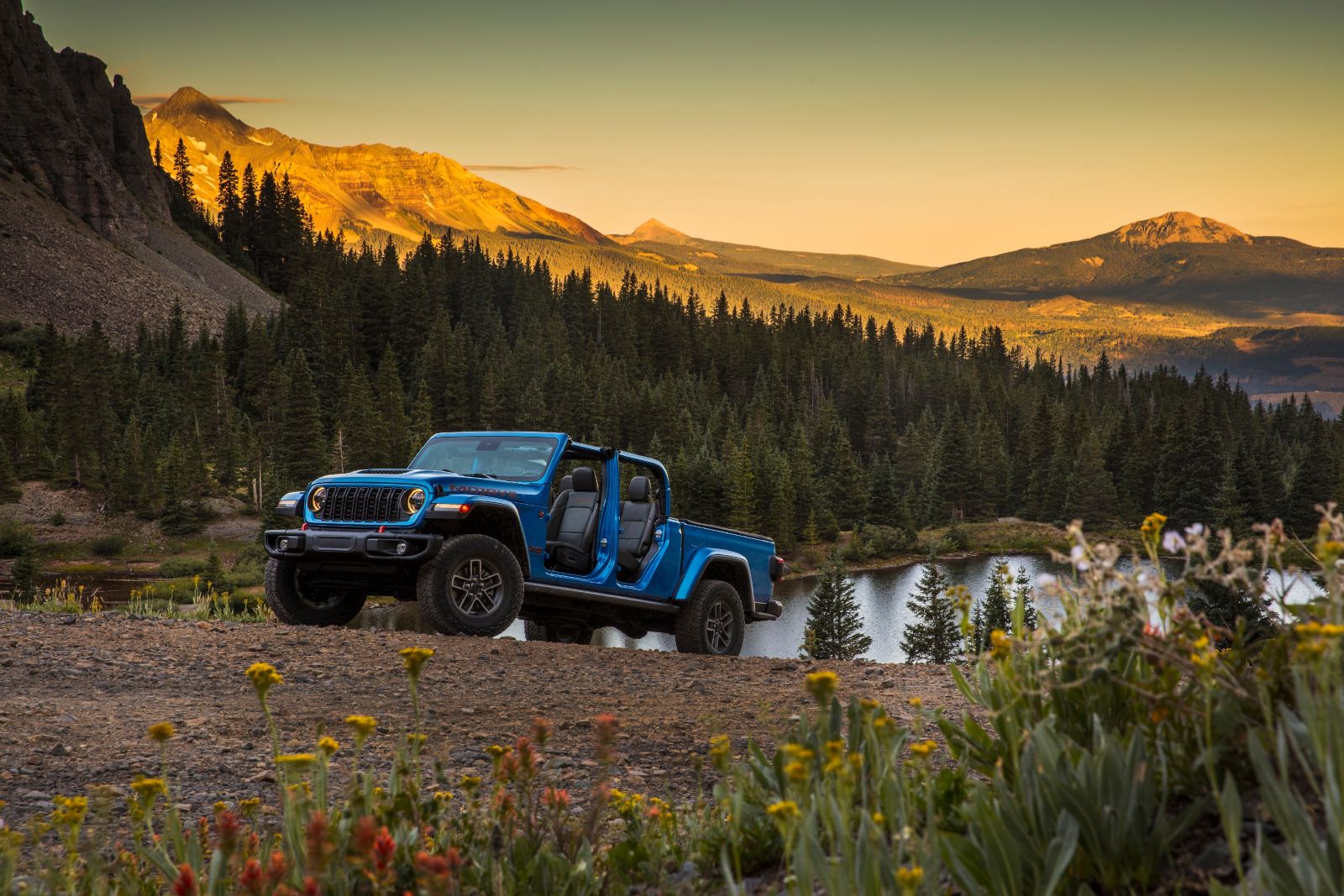
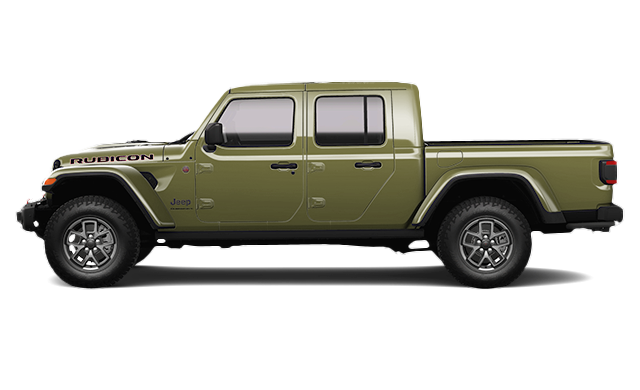
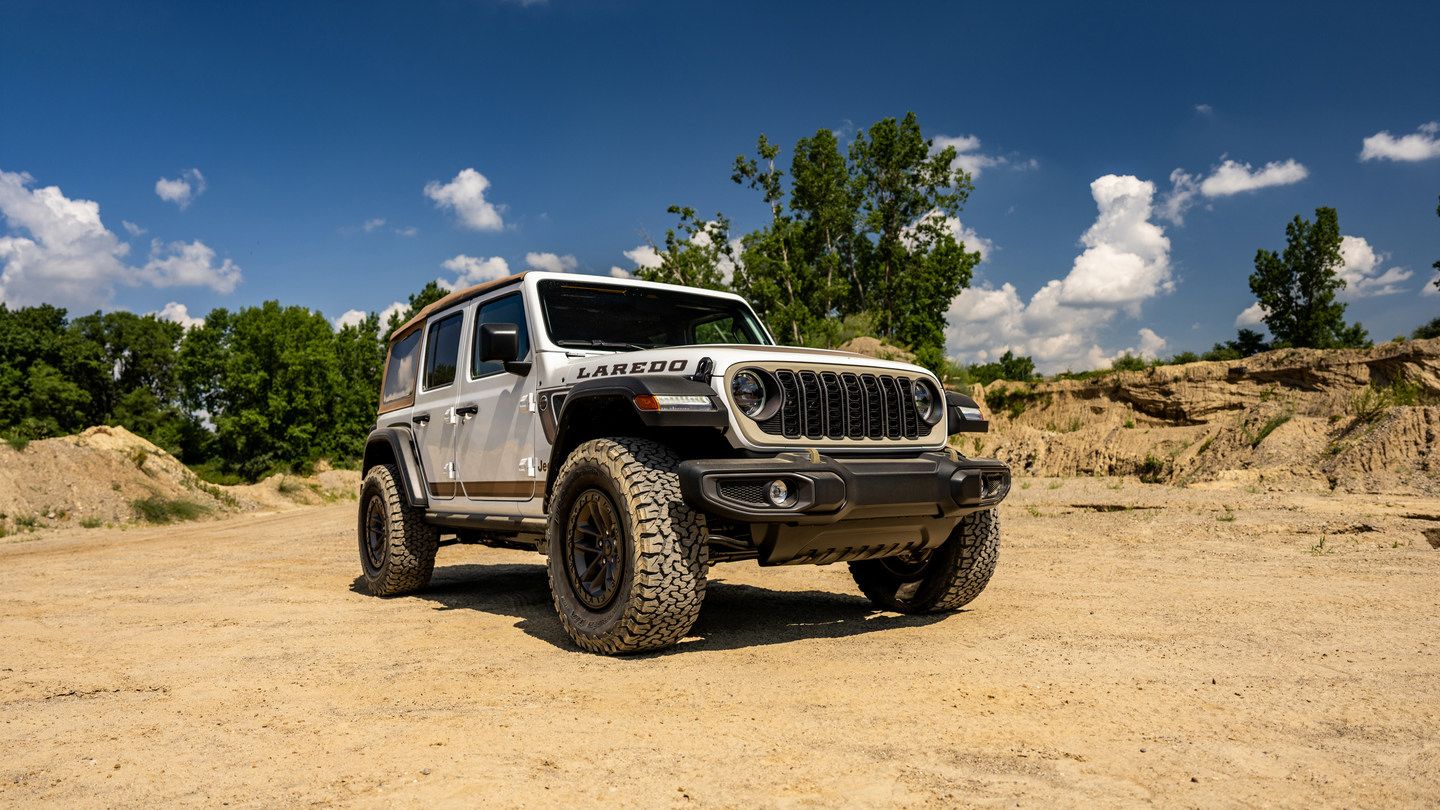
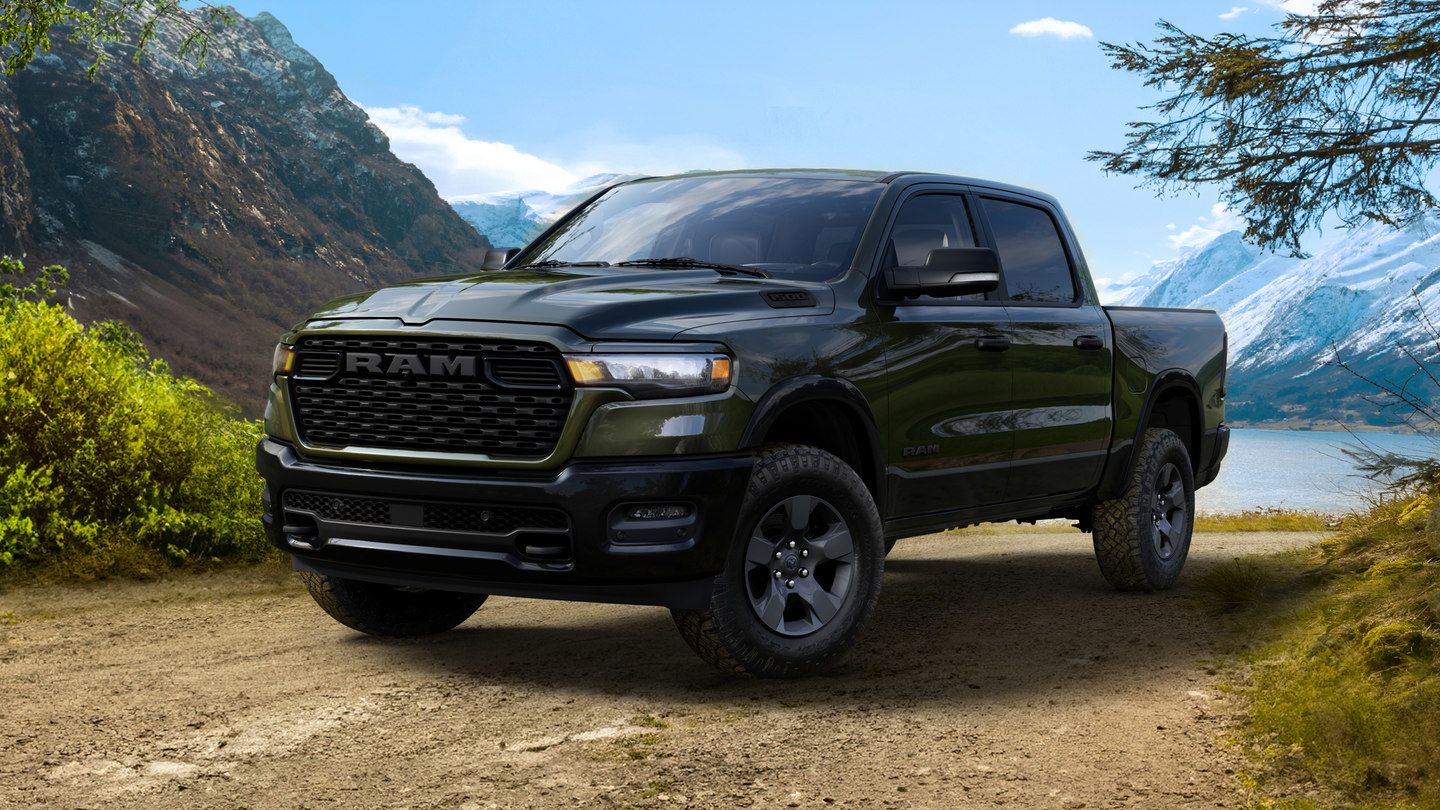
Saskatchewan's terrain demands a vehicle that can handle both rugged backcountry trails and everyday practicality. The 2026 Jeep Wrangler and Jeep Gladiator both carry legendary Jeep DNA, yet serve distinct purposes. The Wrangler prioritizes maximum off-road capability and customization flexibility, while the Gladiator adds truck-bed utility for hauling.
|
Feature
|
2026 Jeep Wrangler
|
Jeep Gladiator
|
|
Engine Options
|
2.0L, 3.6L, 6.4L
|
3.6L V-6
|
|
Max. Horsepower
|
470 hp
|
285 hp
|
|
Towing Capacity
|
2,267 kg (5,000 lbs)
|
3,492 kg (7,700 lbs)
|
|
Roof Configurations
|
Sunrider soft-top, Freedom Top modular hardtop, Sky one-touch powertop
|
Body-colour Freedom Hard Top
|
Off-Road Capability: Built for the Trail
The 2026 Wrangler establishes itself through dedicated off-road hardware. Integrated tow hooks - two front, one rear - provide essential recovery points for backcountry adventures. Skid plates protect the fuel tank and transfer case from trail obstacles. The Corning Gorilla Glass windshield adds durability where branches and debris are common.
The Gladiator brings capable trail performance with heavy-duty steel bumpers. Its five-foot cargo bed accommodates equipment that won't fit inside a traditional SUV cabin - camping gear, construction materials, or outdoor equipment.
For those prioritizing pure trail capability, the Wrangler's shorter wheelbase and dedicated recovery hardware create advantages on technical terrain. The Rubicon trim adds specialized off-road components, while the Moab 392 delivers 470 hp through its 6.4-litre engine for confident rock crawling and steep ascent performance.
Powertrain Versatility: Matching Power to Purpose
The Wrangler offers three distinct engines. The 2.0-litre turbocharged four-cylinder provides efficient daily driving. The 3.6-litre V6 delivers proven naturally aspirated power. The 6.4-litre V8, exclusive to the Moab 392, produces 470 hp for maximum trail output.
Both vehicles accommodate automatic and manual transmissions, preserving driver engagement for enthusiasts. The Wrangler's engine lineup allows buyers to select power levels matching their specific use - from efficient commuting to high-output trail performance.
The Gladiator runs a single powertrain: the 3.6-litre Pentastar V-6, rated at 285 hp and 260 lb-ft of torque, paired exclusively with an eight-speed automatic transmission. That consistent setup handles off-road demands while supporting towing and hauling missions for construction materials, camping equipment, or outdoor gear.
Towing and Utility: Capacity Differences
The Gladiator's 3,492 kg (7,700 lbs) towing rating exceeds the Wrangler's 2,267 kg (5,000 lbs) by 1,225 kg (2,700 lbs). This advantage supports boat trailers, equipment haulers, or recreational toys across long distances or challenging terrain.
The Gladiator's five-foot cargo bed enables open-air hauling that the Wrangler's enclosed cabin cannot replicate. Landscaping materials, construction supplies, or oversized camping gear fit naturally in the bed configuration.
The Wrangler's focus remains on trail capability and versatility through its roof configurations - adaptability that transforms the driving experience without permanent modifications.
Customization and Roof Options: Adaptability Advantage
The Wrangler's modular roof system defines its character. The Sunrider soft top allows quick open-air access. The Freedom Top three-piece modular hardtop lets drivers remove individual panels. The Sky one-touch powertop provides electric operation. This range supports different weather conditions throughout Saskatchewan's varied seasons.
Body-colour fender flares protect the body while maintaining clean aesthetics. Each trim carries distinct wheels - from the Sport's 17-inch steel painted Low Gloss Black to the Moab 392's 17-inch aluminum beadlock-capable Low Gloss Smoked Bronze. These variations allow buyers to match appearance to intended use without aftermarket modifications.
The Gladiator offers its body-colour Freedom Hard Top and fender flares, maintaining Jeep aesthetics while supporting the truck configuration. Special editions like the Willys '41 Buzz add heritage-inspired styling with exclusive trim content.
Technology and Connectivity: Modern Trail Tools
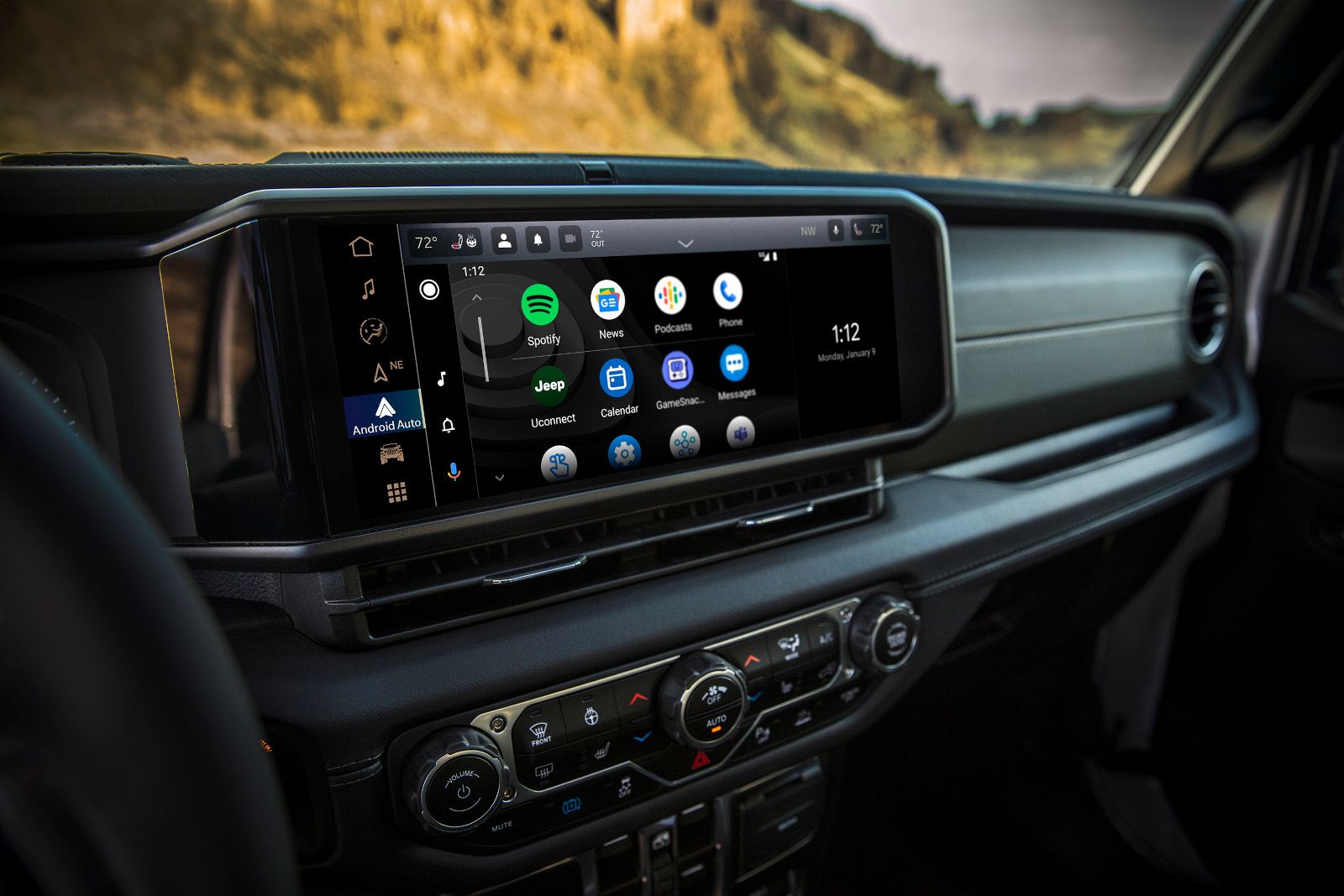
Both vehicles feature Uconnect 5 with a 12.3-inch display, providing navigation and connectivity. The Wrangler includes SiriusXM Radio and SiriusXM Guardian Connected Services for remote vehicle access and emergency assistance.
The forward-facing off-road camera assists with obstacle spotting on technical sections where the driver's sight line is blocked. It helps position the vehicle precisely when approaching rocks, ruts, or steep descents. Nine Alpine speakers deliver audio quality for both on-road and trail use.
The Gladiator provides its 12.3-inch touchscreen with a 7-inch driver cluster. The Trailer Tow Package integrates towing functions. LED headlamps and fog lamps improve visibility during early morning departures or late returns from remote locations.
Safety and Driver Assistance: Confidence Features
Advanced multistage front airbags and supplemental front seat side airbags protect occupants in both vehicles. The Wrangler includes ParkSense rear park assist, Blind-spot Monitoring, and Rear Cross Path detection for manoeuvring and lane changes.
Adaptive Cruise Control with Stop manages highway speeds and adjusts to traffic flow, reducing driver fatigue on long Saskatchewan highway stretches. These systems support rather than replace active driving.
The Gladiator offers remote start and keyless entry for cold weather convenience. Its LED lighting package improves visibility during winter months when daylight hours are limited.
Saskatchewan Terrain Considerations: Real-World Application
Saskatchewan's pairing of highway driving, gravel roads, and backcountry trails requires vehicles handling diverse conditions. The Wrangler's shorter wheelbase and dedicated recovery points suit trails where tight manoeuvring and vehicle extraction are common. Its removable roof panels transform summer camping trips into open-air experiences while maintaining winter weather protection.
The Gladiator's longer wheelbase and truck bed serve buyers whose work or recreation involves frequent cargo hauling. Construction professionals, farmers, or outdoor enthusiasts transporting bulk materials will use the open bed regularly. Extended length affects tight turn navigation on technical trails.
For drivers whose primary focus is conquering challenging terrain and customizing their vehicle for specific adventures, the Wrangler's design priorities align more directly. The ability to swap roof configurations, select from three engine options, and leverage integrated recovery hardware creates a platform built around off-road capability first.
Conclusion: Choosing Your Adventure
The 2026 Jeep Wrangler and Gladiator serve distinct buyer needs. The Wrangler excels in pure off-road capability and customization flexibility. Its three engine options - 2.0-litre, 3.6-litre, and 6.4-litre - allow buyers to match power output to specific needs, with the Moab 392's 470 hp delivering strong trail performance.
The Wrangler's modular roof system offers adaptability that transforms the driving experience across seasons and conditions. Integrated tow hooks and protective skid plates demonstrate purpose-built design for serious off-road adventures.
The Gladiator counters with superior towing capacity — 3,492 kg (7,700 lbs) versus the Wrangler's 2,267 kg (5,000 lbs) — and a five-foot cargo bed for hauling construction materials, equipment, or outdoor gear. Buyers needing truck-bed utility and maximum towing will find the Gladiator better suited to their needs.
Anderson Motors Ltd. in Saskatchewan can walk you through both vehicles' trim levels and help you configure the ideal setup for your lifestyle. From trail-focused capability to truck-bed versatility, both the 2026 Jeep Wrangler and Gladiator are built around the same core Jeep off-road standard.